Connecting the social and built environment to health and health inequalities
History
Since its inception in the early 1960s, the Social Environment and Health (SEH) Program has been a leader in the development of theory and research on the major roles of social factors in the etiology and trajectories of health across the life course. Founded as a cross-disciplinary program by psychologists John R. P. French, Jr., Robert Kahn, and Floyd Mann, SEH continues to be one of the most interdisciplinary programs in SRC, with collaboration among scholars trained across the social and health sciences, including gerontology, architecture, epidemiology, and environmental health.
Today, SEH maintains the foundational tenet that health is socially patterned by the confluence of factors at the individual, environmental, and societal levels over the life course. We specialize in integrating knowledge across multiple disciplines and using innovative, cutting-edge methods to spatially characterize the social and environmental context in which people live their lives. Our interdisciplinary faculty includes social, environmental, and infectious disease epidemiologists, as well as gerontologists and experts in human-centered design. Our work examines integrated contextual exposures, including the neighborhood social and built environment, extreme weather events, housing conditions, and the contexts that shape the distribution of infectious pathogens and their consequences. We examine a broad range of health and social outcomes including chronic illness, cognitive function, disability, musculoskeletal health, and housing instability. We also interrogate the factors and processes that may link or modify the relation between the environment and health, including biomarkers of premature aging and housing modifications.
The program is home to the National Neighborhood Data Archive (NaNDA), a NIH-funded open data repository of neighborhood measures, nationwide, dating back to at least 1990. The purpose of NaNDA is to eliminate duplication and redundancy in siloed neighborhood research; enhance rigor and reproducibility in research in a reliable and cost-effective manner; and facilitate the study of neighborhoods in the most pressing health and social issues facing the US population.
The program has also been home to the Americans’ Changing Lives Study (ACL) (established in 1986 by PI James S. House) for over thirty years. ACL is the oldest ongoing nationally representative longitudinal study of the role of a broad range of social, psychological, and behavioral factors and the way health changes with age over the adult live course.
People
Faculty & Affiliates

Philippa Clarke
Research Professor
Other affiliations:
Department of Epidemiology, School of Public Health
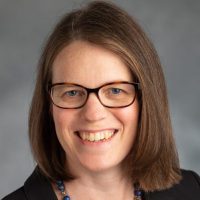
Carina Gronlund
Research Assistant Professor
Social Environment & Health Program

Grace Noppert
Research Assistant Professor
Social Environment & Health Program
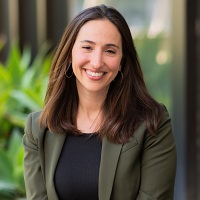
Kate Duchowny
Research Assistant Professor
Social Environment & Health Program

Marilyn Sinkewicz
Research Investigator
Social Environment & Health Program

Kimberly Rollings
Research Investigator
Social Environment & Health Program
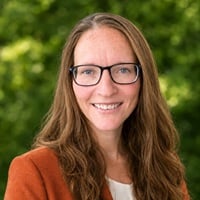
Erin Ware
Faculty Affiliate
Social Environment & Health Program
Research Staff
 Iris Gomez-Lopez, Geospatial Analyst
Robert Melendez, Geospatial Data Specialist
Robert is a data analyst who has expertise in the data we use in order to understand neighborhood context. For example, he takes all of the data from the US Census to create measures of neighborhood poverty, affluence, and segregation.

Lindsay Gypin, Data Project Manager
Lindsay Gypin (she|her) joined the SEH program and the National Neighborhood Data Archive as a Data Project Manager. She is an experienced educator and librarian, and recently earned an MLIS with a certificate in Research Data Management at the University of Denver. She enjoys playing board (and video) games with friends, reading, and spending time with her pets, Dewey, Dexter, and Quinn, and partner, T.
Sam Karsky, Project Coordinator

Sam Karsky is a Project Coordinator for the Weatherization Health Effects study. He is an alumnus of Texas A&M University, where he earned his BS in Public Health in 2021. He furthered his education at the University of Michigan School of Public Health, receiving his MPH in Health Behavior and HealthEducation in 2023. Sam has a strong background in Community-Based Participatory Research and is deeply passionate about addressing environmental and climate justice issues. Outside of work, Sam is an avid rock climber and cyclist, and he enjoys experimenting with new recipes in his free time
Administrative Staff

Amanda Donovan
Amanda Donovan is a Web Content Administrator for the Social Environment and Health Program, where she assists with pre- and post-award research project management. She received her BA in Russian Language and Literature from Michigan State University.
Nicholas Prieur
Nicholas Prieur is a Research Process Senior Manager in the Social Environment and Health Program, where he serves as SEH’s overall research administrator. In his role he manages all pre-award research activities, financials, HR transactions, restricted project data contracts, IRB’s, and other program needs. He also leads the program’s shared administrative team, with specializations in post award, editing, publication production, social media, website maintenance and computing support. He received his BS from Michigan State University.
 Rachel Oeffner
Rachel Oeffner is a Research Administrator Lead for the SEH program. She graduated with a bachelors in Sport Management from Bowling Green State University in 2014 and a Master of Business Administration from Spring Arbor University in 2018. She works with faculty and staff on pre- and post-award activities.
 Abigail Weigel
Abigail Weigel is a Wisconsin native who has joined the SEH program as an Administrative Assistant Senior, where she assists the program with broad based administrative duties in support of the overall research portfolio. She graduated from the University of Wisconsin – Stevens Point with a BS in Wildlife Ecology in 2014. Before joining the University, she gained administrative experiences in the wildlife, equine and veterinary medicine fields. In her spare time she enjoys adventuring with her horse Kozy and her Labrador Retriever Nash.
Post-doctoral Fellows


 Chihua Li, Post-doctoral Research Fellow
Chihua Li is joining SEH as a Post-doctoral Research Fellow with an interest in studying the development and management of chronic diseases among elderly populations. He received a doctoral degree at Columbia University. He likes exercise, training, and cooking.
Talia Sternbach, Post-doctoral Research Fellow
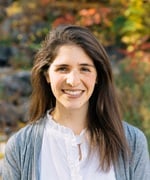
Talia is a postdoctoral fellow in epidemiology whose research focuses on the health impacts of environmental exposures (e.g., heavy rainfall, temperature) and environmental and social policies. Her current work examines whether extreme precipitation and flooding increase infectious disease risk at national and local levels, including in Detroit, and aims to identify potential preventive interventions. Her past work and broader research interests include exposures to air pollution and indoor temperature and methods for impact evaluation. Talia holds a BA in Environmental Science and received her MSc and PhD in Epidemiology from McGill University (Montréal, Canada).